What is Steel? – An Introduction
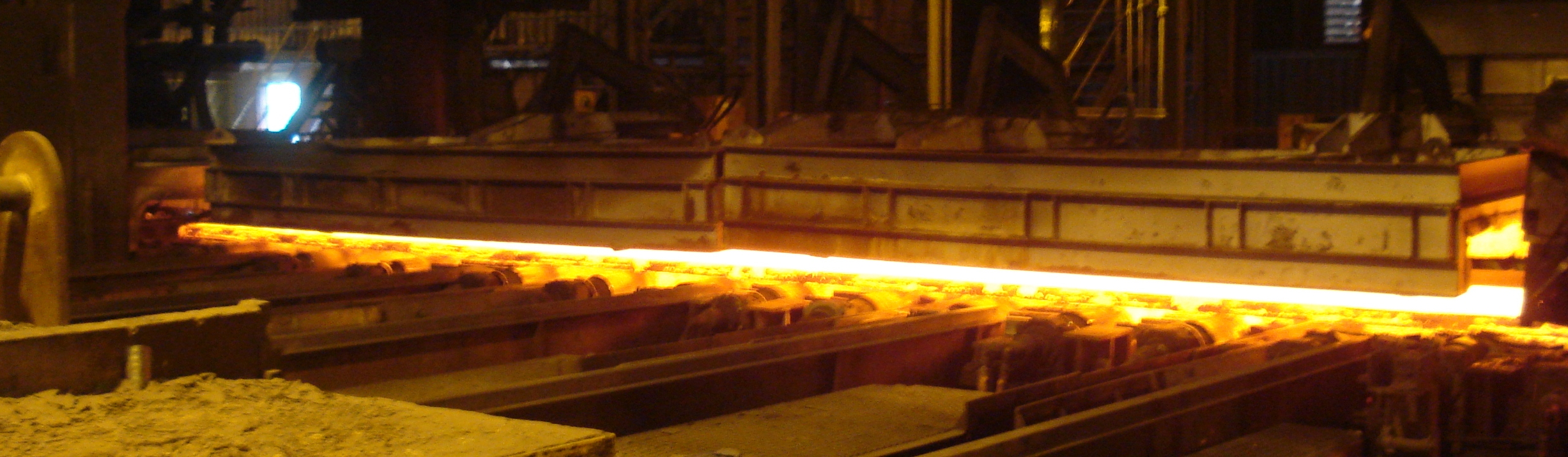
Although most people in first-world countries make extensive use of steel in their daily activities, few people, other than engineers, even think about it and most people, including a surprising number of engineers, have very little understanding of what it is. This Technical Tip is the first in a series of Tech Tips on the topic of steel and steel alloys.
In the simplest of definitions, steel is Iron with Carbon additions of between 0.08% to 2% (with the upper limit being 2.06 or 2.14% depending on the literature source). If the Carbon content is increased to above 2%, the alloy is classified as cast iron. In addition to Carbon, Iron can be alloyed with a number of other elements to improve the properties of the basic Iron/Carbon alloy. For example, Manganese (Mn) is often added up to a limit of 0.5-1.8%. Mn increases strength with slight reductions in elasticity – these effects are significant up to levels of 3%, but the effect drops off between 3-8%. Mn also benefits forgeability and welding properties. Increasing the Mn content to between 11-15% (and C to 1%) results in an alloy called Hadfield’s steel, which is an austenitic wear-hardening steel. Mn is also important in steel manufacture as it facilitates the removal of excess Oxygen and Sulphur during the manufacturing process by forming manganese oxides and sulphides. Chrome (Cr) and Nickel (Ni) are also often added to improve the properties of the material. Additions of Cr (up to ~1.5%) and Ni (up to ~5%) increase hardness and tensile properties, but when alloyed with carbon, Cr forms carbides that can reduce the toughness and weldability of the steel. High levels of Cr (above 12%) give steels corrosion resistance, and is the ‘existential ingredient’ in all stainless steels. Ni additions play a significant role in heat treatment, increasing strength and toughness without reducing weldability, and play an important role in stabilising austenite in stainless steels. Molybdenum (Mn) is sometimes added, up to 5%, to increase hardenability, high-temperature strength, and creep resistance. In stainless steels, Mo is added to improve the pitting resistance of austenitic stainless steels. Other alloying additions, such as Silicon (Si) and Aluminium (Al), are used primarily to remove dissolved Oxygen in the molten metal during manufacture (i.e. the so-called Si and Al killed steels). Although Si is primarily added as a deoxidiser, it also enhances the yield strength and hardness of ferritic steels, without significantly reducing ductility, and improves the electrical properties of the steel when added at levels between 2% and 4%. Other relatively common alloying elements include Boron (B), Copper (Cu), Nitrogen (N), and Vanadium (V), which are all used in small amounts to alter various properties of the material.
By changing the alloy content, working and/or heat treating the steel, a large range of properties can be achieved with i) tensile strengths ranging from around 350 MPa to 2400MPa, ii) fracture toughness ranging from 50 to 200 MPa√m, and iii) hardnesses ranging from 20-65HRc. Plastic deformation associated with hot and cold working processes such as rolling, forging or extrusion operations generally improves the mechanical properties by i) refining the as-cast microstructure (achieved by breaking up large grains, dendritic structures and any regions of alloy segregation), ii) closing shrinkage voids/areas of porosity, iii) breaking up deleterious oxide and non-metallic inclusions, and iv) work hardening. Depending on the carbon content and, to some degree, the other alloying elements in the material, the microstructure and, hence, the mechanical properties of a particular steel can be changed by heat treatment to give a wide range of properties.
Although it is often assumed that the mechanical properties of a section of material/plate are isotropic (i.e. has similar properties in all directions), almost all mechanical working processes introduce some anisotropy, and the mechanical properties will vary in different directions (i.e. the properties in the longitudinal direction are better than in the transverse direction – in a similar manner to wood). This anisotropy is related to the changes in the grain structure, which is broken up and typically elongated by the working process. Even though such isotropy is generally not beneficial, the alignment of grain structure achieved by rolling and forging processes can be used to improve the performance of components like bolts and crankshafts by aligning grain structure with stress contours.
This ability to alloy and heat treat steel makes it arguably the most versatile and cost-effective material used in engineering. Our next Tech Tip gives an overview of typical classifications and common specifications that are used to control both the alloy content and mechanical properties.